


How Bag2Bag Is Building One Hospitality Model for all travel needs
India’s travel economy is no longer driven by a single kind of traveler. The country is witnessing the rise of what can best be described as a new travel triangle – Work, Transit, and Experience People move not just for vacations, but for meetings, mobility, flexibility, short breaks, and lifestyle-driven journeys.
In cities like Gurugram, Mumbai, travel is deeply connected to business velocity. Professionals fly in for meetings, consultants shuttle between offices, startup founders move across cities, and hybrid workers increasingly seek flexible stays that fit unpredictable schedules.
In destinations like Jaipur, Goa, however, travel is driven by culture, leisure, discovery, and immersive experiences. Travelers are not just booking a room; they are booking a mood, a weekend, a celebration, or an escape from urban routine.
Despite these completely different travel motivations, hotel bookings with Bag2Bag Hotels & Homes are quietly adapting to both worlds without fundamentally changing its model.
A Shift in How India Travels
For years, hospitality platforms were built around fixed assumptions:
- One-night stays
- Standard check-in timings
- Uniform hotel expectations
- City-agnostic operations
But today’s traveler behaves differently.
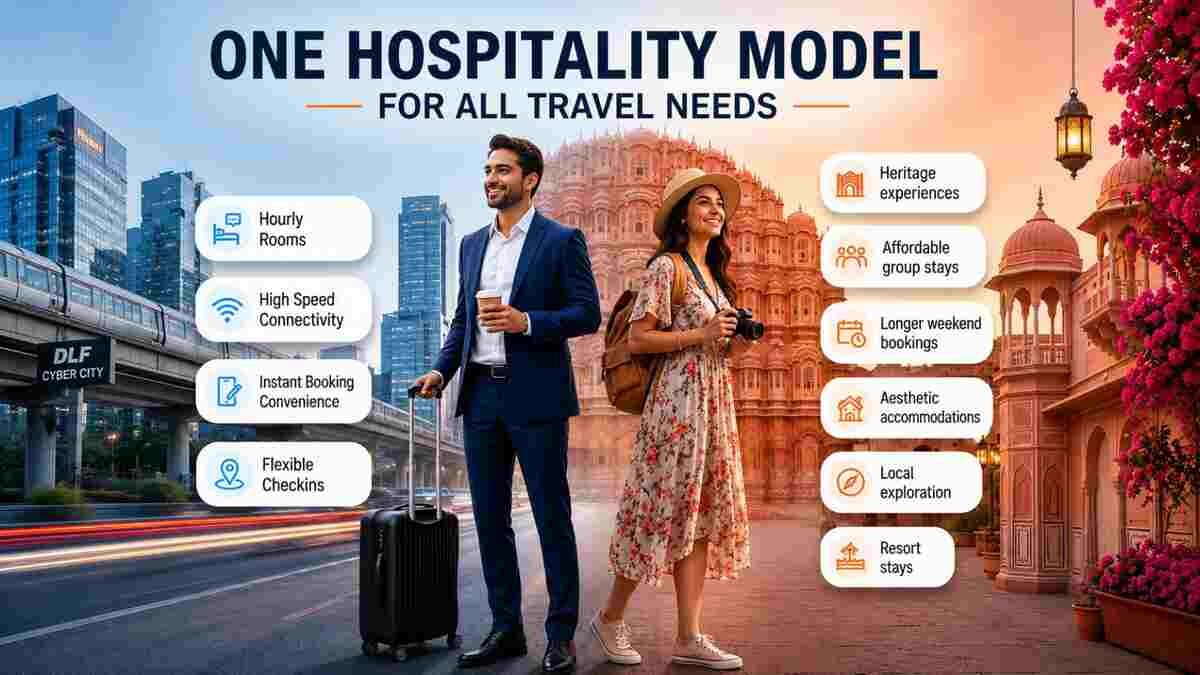
A business traveler in Gurugram may need:
- a room for a few hours between meetings,
- flexible check-ins,
- proximity to corporate hubs,
- high-speed connectivity,
- instant booking convenience.
A leisure traveler in Jaipur may prioritize:
- heritage experiences,
- affordable group stays,
- longer weekend bookings,
- aesthetic accommodations,
- local exploration.
- Resort stays
The purpose of travel has evolved and with it, hospitality expectations have changed dramatically.
Bag2Bag’s approach reflects this shift. Instead of treating hospitality as a standardized product, the platform is adapting to how people actually move across India.
Gurugram: The Rise of Work & Transit Travel
Few cities represent India’s modern work culture as strongly as Gurugram.
With its concentration of multinational companies, startups, consultants, remote teams, and business travelers, the city operates on speed and flexibility. Travel here is often functional and time-sensitive.
Professionals may arrive on early morning flights, attend back-to-back meetings, or extend stays unexpectedly due to work schedules. Increasingly, travelers are also blending work with short personal downtime, creating demand for more flexible hotel usage.
This is where the concept of “transit hospitality” is growing rapidly.
Hotels are no longer being used only for overnight stays. They are becoming temporary workspaces, recharge points, meeting hubs, and flexible urban infrastructure.
Bag2Bag’s operating model naturally aligns with this emerging behavior by enabling:
- instant bookings,
- short-duration stays,
- flexible usage patterns,
- app-first convenience,
- access across business corridors.
In corporate hubs like Gurugram, convenience often matters more than luxury. Travelers want frictionless experiences that fit into fast-moving schedules.
Jaipur: The Experience Economy of Travel
Jaipur represents the other side of India’s evolving travel landscape.
Unlike Gurugram’s urgency-driven travel culture, Jaipur thrives on experience-driven tourism. Travelers come seeking heritage, architecture, local cuisine, celebrations, and slower itineraries.
But even here, traveler expectations are changing.
Today’s Jaipur visitor is not limited to traditional tourists. The city is increasingly attracting:
- weekend travelers from metros,
- digital creators,
- remote workers,
- destination wedding guests,
- young couples,
- cultural explorers.
These travelers expect hospitality to be digitally accessible, flexible, and affordable while still delivering local relevance.
This is where Bag2Bag’s platform adaptability becomes significant.
Without changing its core operating model, the platform can support a completely different travel intent:
- longer leisure stays,
- curated accommodations,
- group-friendly options,
- budget-conscious flexibility,
- seamless digital booking experiences.
In Jaipur, the hotel becomes part of the experience itself.
One Platform, Multiple Travel Behaviors
What makes this shift interesting is that Bag2Bag is not building separate businesses for different cities. Instead, it is building a hospitality infrastructure capable of adapting to varied travel behaviors across India.
- Corporate hubs demand flexibility and speed.
- Heritage destinations demand immersion and comfort.
- Transit corridors demand accessibility.
- Emerging cities demand affordability.
The future of hospitality may not belong to rigid hotel formats, but to platforms that can dynamically respond to traveler intent. Bag2Bag’s positioning sits at the intersection of this transformation.
The Future of Hospitality Is Intent-Led
The traditional hospitality industry categorized travelers into broad segments:
- business,
- leisure,
- luxury,
But modern travel behavior is far more fluid.
A single traveler may:
- work remotely in Gurugram during the week,
- travel to Jaipur for a weekend,
- book short stays during transit,
- extend trips spontaneously,
- combine business with leisure.
This has created demand for what can be called “intent-led hospitality” , where accommodation adapts to the purpose of the trip, rather than forcing travelers into fixed formats.
Across India, flexibility is becoming one of the most important expectations in hospitality.
And as travel continues to evolve, platforms that understand local city behavior while maintaining operational consistency may define the next phase of the sector.
India’s Travel Triangle Has Arrived
The future of Indian travel is no longer just about destinations. It is about movement between work, transit, and experience. Gurugram and Jaipur may represent two very different Indias, but together they reveal a larger consumer shift: travel is becoming more dynamic, more purpose-driven, and more personalized
Bag2Bag’s growing relevance lies in recognizing that shift early , building a hospitality platform flexible enough to serve the speed of corporate India and the soul of experiential India at the same time.


